
The Boom Mic Effect: What People-Watching Taught Me About Headsets
Author: Mark Prieditis
8 November 2026
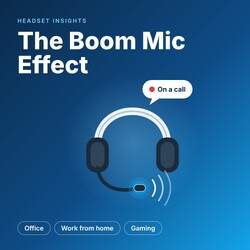

The most useful thing a headset can have might not be a spec on the box. It's the microphone you can see.
Many manufacturers now outsource their customer research. Surveys, focus groups and data panels feed into product roadmaps. That's fine as far as it goes. But it looks very different from what you notice when you stand in a busy office, a home study or an airport and simply watch how people use their headsets.
I've spent a lot of time doing exactly that: in our customers' offices, with hybrid teams and work-from-home staff, and more recently talking with online gamers. One pattern came up again and again. People like a headset with a microphone that sticks out. And the reasons have very little to do with audio quality.
In the office: the mic tells the room you're on a call
Walk across an open-plan floor and you can read it in a second. Someone wearing a headset with a boom mic in front of their mouth is on a call. Colleagues lower their voices, hold the question for later, or wait for a gap. Nobody needs a sign or a red light.
Now compare a mic-less headset or a pair of earbuds. Is that person on a customer call, in a Teams meeting, or listening to a podcast? You can't tell, so people interrupt, and the person on the call loses the thread.
There's a second audience too: managers. A visible mic says "I'm working." A manager looking across the floor can see who is on calls, who is with customers and who is free. It's not about surveillance. It's about everyone reading the room without asking.
Working from home: the mic is the new closed door
Mix work-from-home staff into the picture and the effect gets stronger. At home there's no meeting room and often no door to close. Partners, kids and housemates walk in mid-sentence.
A visible boom mic does the job of that door. Family members see it and think twice before asking what's for dinner. It sends a clear message: "I'm working, and I might be talking to a customer right now." Earbuds or a sleek mic-less headset look like someone relaxing with music, which invites interruption.
The result is fewer awkward moments on calls and a clearer line between home life and work time.
What the gamers told me
I expected online gamers to care mainly about sound and latency. They do. But when I asked why they prefer headsets with a stick-out mic, the answers sounded a lot like the office.
- It makes them feel part of the game. The mic in front of their mouth puts them in the team, on comms, in the action.
- It feels serious. A visible mic says "I'm here to play properly," not "I'm half-listening."
- It signals "busy" at home. Gamers get interrupted by family too, and the mic tells people they're mid-match.
Different world, same psychology. A visible mic is a signal of commitment and presence, whether you're closing a sale or holding a position with your squad.
Airports, trains and the tube: the "leave me alone" headset
Now go people-watching somewhere else. Sit in an airport terminal, or watch people board a train, the tube or a bus. You'll see plenty of big over-ear headsets with no visible mic, and they send a very different message.
I call them the "stay away from me" headsets. They aren't about talking to anyone. They're about shutting the world out. When you see one in use, you know not to start a conversation.
That's the right design for a commuter. It's the wrong signal for someone whose job is to be on calls. The same headset that says "don't talk to me" on a train says "I'm not really working" in an office.
What this means when you choose headsets
A headset isn't just an audio device. It's a social signal, and that signal changes with the setting. When you're buying for a team, look past the spec sheet and ask:
- Where will it be used? Open-plan office, home office, or out and about?
- Who needs to read the signal? Colleagues, managers, family?
- Is the job mostly calls? If so, a visible boom mic helps everyone around the wearer, not just the person on the other end.
Research reports and focus groups have their place. But some of the best product insight comes from simply watching how people work. Sit in a busy office for an hour and you'll learn things no survey will tell you.
At Telrex we help businesses choose headsets that fit how their people actually work, in the office, at home and everywhere in between. If you're reviewing your team's setup, we're happy to talk it through.