
Who Should You Trust for Headset Advice: The Brand Rep or the Person Who Has Installed Thousands?
Author: Telrex
22 September 2026
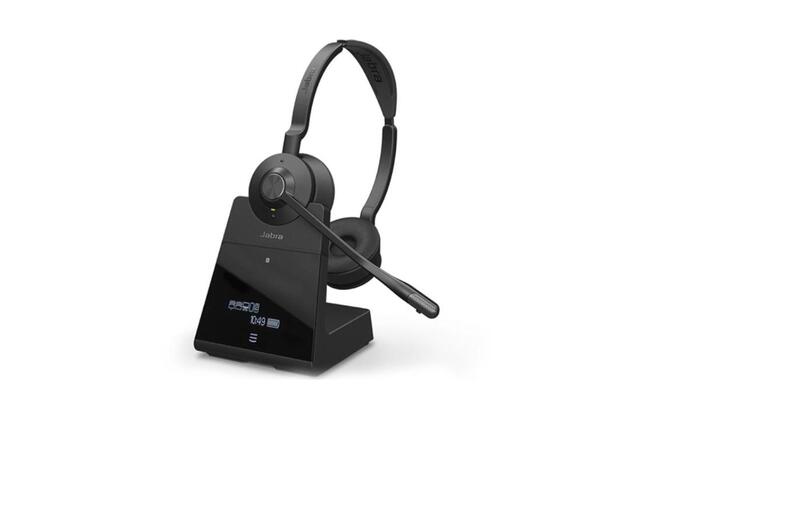

When a business sets out to buy headsets, phones or meeting-room gear, the first piece of advice usually arrives free of charge. It comes from a manufacturer's sales rep or business development manager, and it's polished, confident and full of product knowledge. It's also, by design, about one brand. This guide is about the difference between that advice and the advice you get from someone who has spent years fitting out real businesses with gear from every brand, and why the difference matters more than the price tag.
What a manufacturer's rep is actually there to do
Let's be fair to them. A brand's BDM knows their own range inside out: every model, every feature, every roadmap slide. If you've already decided on that brand, they are a useful person to have in the room. But their job is to grow that brand's share of your business. They'll answer your question with the closest thing in their catalogue, whether or not it's the best fit, because the alternative is recommending a competitor, and nobody gets paid for that. They also tend to move on. The rep who sold you the system is often at another vendor by the time the warranty claim comes around, and the person who inherits your account has never seen your office.
None of that makes them dishonest. It makes them a specialist with a narrow brief, and you should treat their advice accordingly: excellent on their product, silent on whether you should be buying it at all.
What an experienced reseller brings instead
A multi-brand reseller with real industry mileage has seen the same problem solved ten different ways. At Telrex we've been supplying and installing business communications for over 20 years, and we stock Jabra, HP Poly, EPOS, Yealink, Logitech, Panasonic and more. That means when a customer describes their situation, we're not asking "which of our models fits?" but "which product on the market fits?" and we can be honest about the trade-offs, because we make our living on the second and third orders, not the first.
The other thing experience gives you is a memory of what goes wrong. Which headset's battery starts fading in year two under contact-centre use. Which desk phone's firmware caused a week of dropped calls on a particular cloud platform. Which video bar sounds great in the demo room and terrible in a glass-walled meeting room. Manufacturers don't put that in the brochure; you learn it by installing hundreds of them and taking the support calls afterwards.
Headsets: the perfect example
Headsets are where the gap between brand advice and independent advice shows up most, because the "right" headset depends almost entirely on the person wearing it, not the spec sheet. A few of the situations we deal with every week:
Contact centre agents. These people wear a headset for seven or eight hours a day, and comfort over a shift beats every other feature. The right answer is usually a lightweight wired or DECT headset with a strong noise-cancelling boom microphone, replaceable ear cushions and a battery (or no battery at all) that outlasts the shift. Some agents need one ear free to hear a supervisor; others in a loud room need both ears covered. A brand rep will show you their contact-centre model. An experienced fitter will ask how loud the floor is, whether agents hot-desk, what phone system or softphone they use, and whether the headsets need to work with a desk phone via an EHS cable, and then recommend across brands, because Jabra's Engage range, Poly's EncorePro and Savi ranges and EPOS's Impact range each win in different rooms.
Mobile and hybrid users. A sales rep or manager who moves between the office, the car and home needs a Bluetooth headset that pairs to a laptop and a mobile at the same time, with active noise cancelling for the open-plan office and the train, a microphone good enough that the customer can't tell they're in a café, and a battery that gets through a travel day. Fold-flat designs and hard cases matter more than they sound. This is a completely different product from the contact-centre headset, and a rep for a brand that's weak in this category will still try to sell you their nearest model.
Microsoft Teams and Zoom users. Certification matters here: a certified headset's buttons, busy-light and mute actually sync with the software, and the support path is simpler. But certification is table stakes across the major brands, so the decision comes back to comfort, microphone quality and how the headset behaves when the same person also has a desk phone or a mobile in the mix.
Reception and front counter. Usually a single-ear wireless headset that connects to the desk phone so calls can be answered away from the desk, with enough range to cover the front of house. A great mobile headset is often the wrong choice here.
Noisy sites. Warehouses, workshops and clinics need rugged, hygienic options with strong passive isolation and microphones that reject constant background noise. Some of the best products for this are from brands you'd never hear about from a headset rep at all.
In each case the question isn't "which brand?" It's "who is wearing it, where, for how long, connected to what?" Only a supplier who carries all the brands and has fitted out all those environments can answer that without bias.
How to tell good advice from a sales pitch
A few signs you're getting real advice rather than a brochure: the person asks about your staff and your rooms before they name a product. They tell you what a product is bad at, not just what it's good at. They're happy to recommend a cheaper option when it will do the job. They talk about what happens in year three, not just on installation day. And they can put a demo unit in your hands, because most headset decisions are settled in the first ten minutes of wearing one.
Conversely, be wary when the recommendation arrives before the questions, when every problem happens to be solved by the same brand, and when the person advising you won't be the one you call when something breaks.
Use both, in the right order
The practical approach is to start with an independent, experienced supplier to work out what type of product you need for each group of staff, and only then bring in brand-specific detail where it helps. Manufacturers' reps are genuinely useful for deep product questions, firmware roadmaps and volume pricing on a brand you've already chosen. Just don't let them choose for you.
Talk to people who've done it before
Telrex has been fitting out Australian businesses for more than 20 years from our Brisbane and Melbourne warehouses, and our team supplies and supports every major headset, phone and video brand, so our advice isn't tied to any one of them. Tell us who's wearing the headsets, where they work and what they connect to, and we'll recommend the right product for each role, and you can try them on for yourself in our Loganholme showroom. Browse our headset range, call centre headsets and wireless headsets, or read our guide to choosing between desk phones and softphones. Based in Australia. Shipping nationwide. Contact Telrex for independent advice, or call Brisbane on 1300 665 970 or Melbourne on 1300 881 011.